How Robert Redford Changed Movies with the Sundance Film Festival
:max_bytes(150000):strip_icc():format(jpeg)/robert-redford-sundance-082323-split-f1df7698ea214bc19bb1ade01a3d7895.jpg)
NEED TO KNOW
- Robert Redford, the Oscar-winning actor and director, died Tuesday, Sept. 16, at age 89
- In the early 1980s Redford founded the Sundance Institute nonprofit organization, which puts on the annual Sundance Film Festival
- “It means a lot to me,” he told PEOPLE in 2005. “I’ve devoted so much of my life to it.”
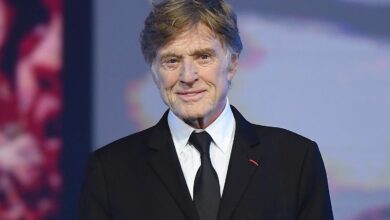
Cinema icon Robert Redford died Tuesday, Sept. 16, at age 89, but his legacy endures — especially when it comes to the 40-years-strong Sundance Film Festival.
Accepting an Honorary Award at the 2002 Oscars ceremony, the star of The Sting and Out of Africa said that while his personal work was “most important,” his other priority was “trying to put something back into an industry that’s been good to me. And, of course, Sundance is a manifestation of that.”
In the early 1980s Redford founded the Sundance Institute nonprofit organization, “dedicated to the discovery and development of independent artists and audiences,” as its mission statement reads.
Not far from Salt Lake City, amid the snow-capped Wasatch Mountains of Sundance, Utah — where in 1968 the actor-director had purchased land and renamed it after his character in Butch Cassidy and the Sundance Kid — Redford joined forces with the Utah State Film Commission to promote what was then called the Utah/US Film Festival.
Twentieth Century Fox Film Corporation/Sunset Boulevard/Corbis via Getty
When critic Roger Ebert documented his visit to an early iteration of the annual festival in 1981, he wrote that the Oscar-winning Ordinary People director hoped the Sundance Institute would “become a clearinghouse for independent filmmakers working outside the studio system.”
Redford admitted to Ebert, “We started this with no rigid expectations… I have no idea what this will turn out to be. I know that it’s getting increasingly hard to get a movie well distributed in this country unless it has the potential to make millions of dollars.”
The 10 low-budget films selected for the organization’s first Filmmakers Lab, he added, “have a lot of promise, and I guess the idea is that they’ll turn out better if the filmmakers have the opportunity to work on them with some experienced professionals.”
Considering the Sundance Institute’s feature film program is still going strong today, Redford’s hypothesis turned out to be true. Led by founding director Michelle Satter, the lab is how Gina Prince-Bythewood was able to take breakout hit Love and Basketball from script to screen in 2000, and how Daniel Kwan and Daniel Scheinert honed the distinct storytelling sensibility that led to 2022’s Oscar-winning Everything Everywhere All at Once.
Among the fellows whose early work has benefited from the institute’s programming — which in the 1980s and ’90s expanded to include documentary, episodic TV, music and more areas of filmmaking mentorship — are Paul Thomas Anderson, Quentin Tarantino, Nia DaCosta, Taika Waititi, Ryan Coogler and Lulu Wang.
“How many of these special projects would have never seen the light of day without Michelle, without Robert Redford’s vision, without this incredible place?” Prince-Bythewood told AP News.
But the success of Redford’s Sundance Institute labs went hand in hand with the festival, which in 1984 officially fell under his organization’s auspices, screening films every January in Park City. “The filmmaking process isn’t complete until you connect the film to an audience,” Satter explained to IndieWire. “That became the opportunity, and we had to continue to develop a marketplace for independent film.”
Looking back on the event’s origins with PEOPLE in 2005, Redford said its purpose was to introduce “a development process for new voices in film, to have a place to work free of the constricts of mainstream filmmaking, which was moving toward more big-budget youth-related films.”
By 1991 when the fest was officially rebranded to Sundance (“I thought it was too self-serving,” Redford said in a 2015 Democracy Now! interview, “but I was outvoted”) it had begun substantially impacting the Hollywood ecosystem.
While in its early days, Redford told PEOPLE, “I was standing out there ushering people into theaters,” a turning point came in 1989 when Steven Soderbergh’s groundbreaking debut Sex, Lies, and Videotape won Sundance’s Audience Award and sold to Miramax. Major studios began making acquisition deals at the festival each January, Redford added. “Then the celebrities started to come, and the media, and fashion.”
George Pimentel/Getty
The steadily increasing celebrity presence put the Sundance Film Festival on the radar of awards voters and movie buffs alike. Without it, audiences may never have heard of Reservoir Dogs, Clerks, Donnie Darko, American Psycho, The Blair Witch Project, Napoleon Dynamite or Little Miss Sunshine. Many titles that premiered at the fest began receiving major Hollywood accolades; in 2022, CODA became the first to go on to win Best Picture at the Academy Awards.
As with scripted indie features, documentaries like God Grew Tired of Us, Paris Is Burning and Man on Wire began making mainstream inroads as well. Redford said in a 2007 interview with the Institute that “by the early ’90s, the Festival had formed enough of a visible platform that we could start leveraging it more aggressively to promote nonfiction work.”
Generating millions in direct investment each year, the event that Redford envisioned is now considered the largest independent film festival in the U.S. “It means a lot to me,” he told PEOPLE in 2005. “I’ve devoted so much of my life to it.”
As Sundance lab mentor and Nashville screenwriter Joan Tewkesbury said to IndieWire, Redford and his collaborators “set up something that has benefited everybody in the entertainment world. If you look at the trajectory of how far it’s come, it’s a f—ing miracle that they pulled it off.”
Redford said in his 2002 honorary Oscar speech that it was important to “make sure the freedom of artistic expression is nurtured and kept alive.” Thanks to all his efforts at Sundance, he’s made sure it will be.
Credit to Nypost AND Peoples